

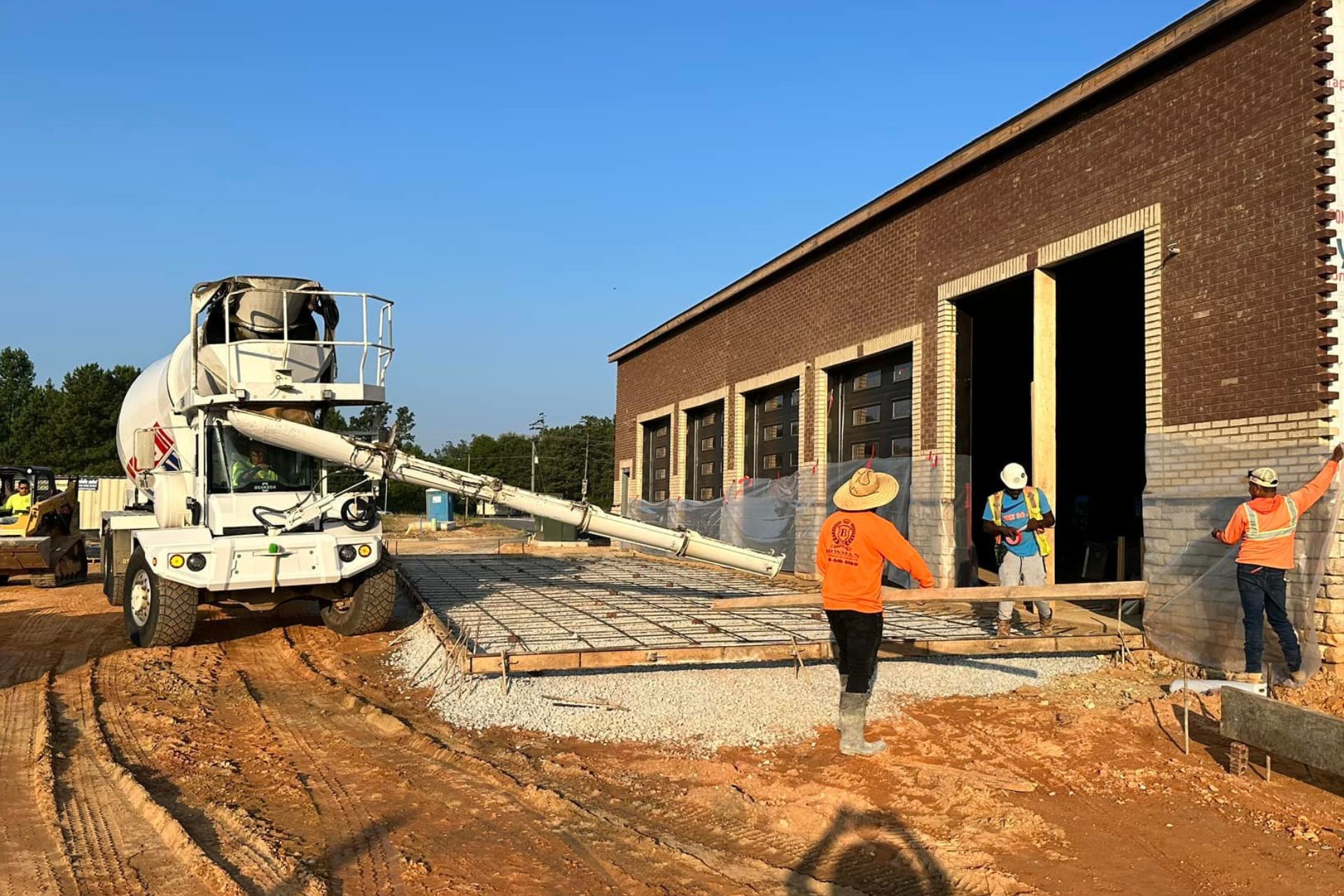
Sidewalks, curbs, and ramps may seem straightforward, but they play a major role in how a commercial property functions. These concrete elements guide traffic, support accessibility, protect landscaped areas, and help create a clean first impression.
For retail centers, multifamily communities, office properties, and service businesses, the details matter.

Sidewalks Support Daily Movement
Commercial sidewalks need to be smooth, properly sloped, and durable enough for constant pedestrian use. Joint layout, finish texture, transitions, and drainage all affect the finished result.
Curbs Help Control Traffic and Water
Curbs define parking areas, protect buildings and sidewalks, and guide stormwater. Poor curb placement or inconsistent elevations can create drainage issues or awkward vehicle movement. Proper forming and layout help the site operate more smoothly.
Ramps Require Precision
ADA access routes and curb ramps must be carefully planned. Slope, landing size, transitions, detectable warnings where required, and tie-ins to existing pavement all need attention. Small differences in elevation can make a big difference in usability.
- Review traffic and pedestrian flow before layout.
- Coordinate elevations with doors, parking areas, and drainage structures.
- Use finishes that balance traction and appearance.
- Plan work phases to maintain safe access when properties are occupied.
When sidewalks, curbs, and ramps are done well, most people simply notice that the property feels safe and easy to navigate. That is the mark of good commercial concrete planning.