

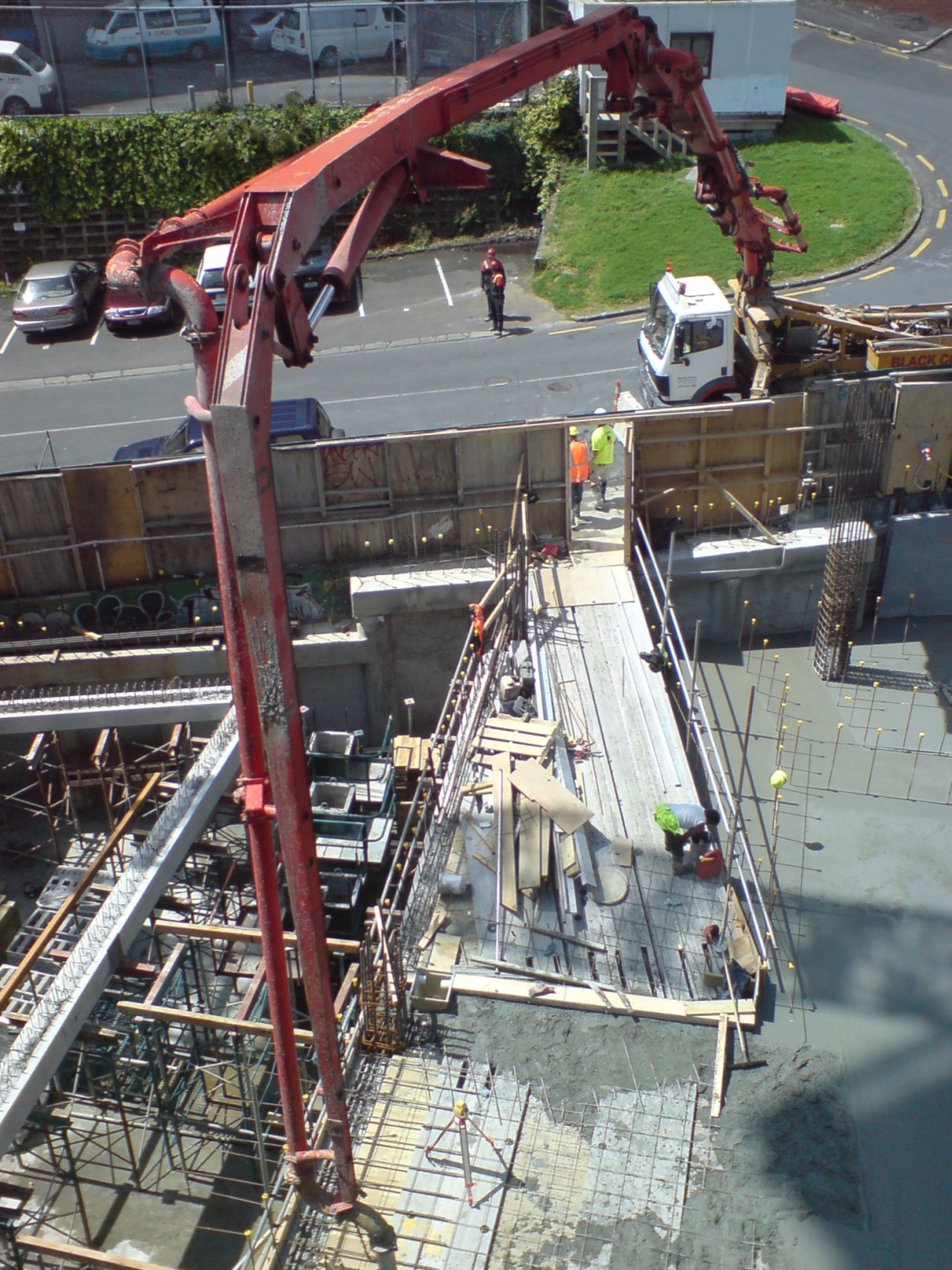
Drive-thru lanes, pickup windows, pharmacy queues, bank lanes, coffee shops, quick-service restaurants, and busy commercial parking areas all have one thing in common: the concrete has to perform under constant, repetitive movement. Passenger vehicles may not look as demanding as tractor trailers, but stop-and-go traffic, tight turning movements, braking, oil exposure, drainage problems, and daily customer volume can wear out a poorly planned surface faster than many owners expect.
For commercial property owners, developers, property managers, and general contractors, the goal is not just to place concrete that looks clean on opening day. The goal is to build lanes, approaches, islands, sidewalks, curbs, and pads that support daily operations with fewer disruptions, fewer safety concerns, and a longer service life.
Why Drive-Thru and Queue Areas Need Different Concrete Planning
A typical parking stall may carry intermittent vehicle loads. A drive-thru lane or queue area carries repeated traffic in the same narrow path all day. Vehicles idle, inch forward, turn around building corners, brake at order stations, and pause at pickup windows. That pattern concentrates stress in predictable locations.
Concrete in these areas should be planned around actual use, not just square footage. A narrow lane next to a building, a radius around a menu board, or the pavement at a pickup window can become a high-wear zone. If the slab, base, joints, and drainage are not designed for those conditions, the owner may see cracking, settlement, ponding, edge damage, and premature repairs.
Start With Traffic Flow and Site Layout
Good commercial concrete work begins before the pour. For drive-thru lanes and high-turnover sites, layout decisions affect concrete performance. Traffic should move smoothly without forcing sharp, repeated tire scrub at weak edges or tight corners. The concrete contractor should understand where vehicles enter, stack, turn, stop, exit, and cross pedestrian paths.
General contractors and developers should coordinate concrete planning with civil drawings, building access, utility locations, bollards, signage, menu boards, landscape islands, curb lines, and ADA routes. When these details are coordinated early, the finished surface is easier to build, easier to maintain, and less likely to interfere with customer movement.
Subgrade Preparation Carries the Load
Even the best concrete mix cannot overcome a weak base. Queue lanes and drive-thru approaches need consistent subgrade preparation because vehicles repeatedly load the same wheel paths. Soft spots, poorly compacted fill, or unstable material below the slab can lead to settlement and cracking.
For commercial projects, subgrade preparation may include removing unsuitable material, proof rolling, correcting wet areas, compacting stone base, and setting proper elevations before forms are placed. The work below the slab is not the most visible part of the project, but it is often the difference between concrete that lasts and concrete that becomes a recurring maintenance problem.
Thickness, Reinforcement, and Mix Design Matter
Concrete specifications should match the use of the site. A drive-thru lane, delivery approach, dumpster pad, or busy parking aisle may require more robust planning than a light-duty pedestrian walkway. Slab thickness, reinforcement, compressive strength, air entrainment, finishing method, and curing practices all influence long-term performance.
Property teams should avoid treating every paved area the same. The areas where cars brake, turn, idle, and queue deserve special attention. On some commercial sites, there may also be occasional delivery trucks, service vehicles, waste collection trucks, or emergency vehicles. Those loads should be discussed before concrete is placed, not after cracking appears.
Joint Layout Helps Control Cracking
Concrete will move as it cures and as temperatures change. A thoughtful joint plan helps guide that movement. In drive-thru lanes and parking queues, joints should be placed with the traffic pattern, slab geometry, curb lines, islands, building corners, and utility structures in mind.
Poor joint layout can create random cracking, awkward panels, and weak corners. Well-planned joints create more predictable panels and make future maintenance easier. Sawcut timing, joint depth, spacing, and the relationship between joints and fixed structures should all be part of the project discussion.
Drainage Is Critical for Customer-Facing Concrete
Ponding water is more than a cosmetic issue. Standing water near a drive-thru window, pedestrian crossing, entrance walk, or parking queue can create slip concerns, customer complaints, freeze-thaw exposure in colder conditions, staining, and accelerated surface wear. Commercial concrete should be finished to move water away from buildings, pedestrian areas, and high-traffic wheel paths.
Drainage planning should account for slopes, curb and gutter, trench drains where needed, storm structures, landscape areas, and tie-ins to existing pavement. Small elevation mistakes can become daily operational frustrations once a site opens.
Curbs, Islands, Bollards, and Pedestrian Protection
Drive-thru and queue areas often include more than flatwork. Concrete curbs, raised islands, equipment pads, bollard footings, sign bases, ramps, and walkways help organize the site and protect buildings, customers, and employees. These details should be built to handle impact risk, vehicle proximity, and the way people actually move through the property.
For property managers and owners, this is where concrete contributes directly to site safety and customer experience. Clear curbs and islands guide traffic. Smooth walks and ramps support access. Properly placed bollards protect building corners, ordering equipment, storefront glass, utilities, and pedestrian zones.
Working Around an Active Commercial Property
Many drive-thru and parking queue projects happen on active properties, not empty construction sites. That means phasing, barricades, temporary access, signage, tenant coordination, customer routing, and curing time matter. A concrete contractor should help plan how work will be staged so the property can operate as safely and efficiently as possible.
Owners should also consider timing. Concrete work around restaurants, retail centers, medical offices, banks, and service businesses may need to be scheduled around peak hours, deliveries, trash pickup, tenant needs, and customer traffic. A practical plan reduces confusion and helps protect the finished work before it is ready for full use.
Maintenance Considerations After the Pour
Long-term performance does not end when the concrete cures. High-turnover commercial sites should be inspected regularly for joint deterioration, drainage issues, settlement, surface scaling, trip hazards, curb damage, and stains from vehicles or service areas. Early attention can keep small issues from turning into larger repairs.
For property managers, routine walkthroughs are especially useful at drive-thru exits, pickup windows, pedestrian crossings, curb returns, dumpster routes, and areas where vehicles turn tightly. These are the places most likely to show wear first.
When to Bring in a Commercial Concrete Contractor
The best time to involve a commercial concrete contractor is before the site is fully committed. Early input can help identify constructability concerns, access issues, phasing needs, elevations, base preparation requirements, and details that may affect the schedule. For existing properties, an experienced contractor can evaluate whether repair, partial replacement, or full replacement makes the most sense.
Caliber Concrete Company works with commercial property owners, developers, property managers, and general contractors on concrete scopes that need to hold up under real daily use. If you are planning drive-thru lane improvements, parking queue repairs, new commercial flatwork, curbs, pads, or access upgrades, contact Caliber Concrete Company to discuss the project.
Planning for Concrete That Supports the Business
Concrete on a high-turnover commercial site is part of the customer experience. It affects access, safety, drainage, traffic flow, maintenance costs, and how a property presents itself every day. Drive-thru lanes and parking queues may seem simple from the outside, but they deserve careful planning because they carry repeated use in the same places.
By paying attention to subgrade preparation, slab design, joint layout, drainage, curbs, pedestrian routes, and project phasing, commercial teams can build concrete that supports the business instead of interrupting it. That is the standard worth planning for before the first truck arrives.