

Commercial concrete does more than create a hard surface. On a busy property, it also has to move water away from buildings, pedestrian routes, truck paths, dumpster pads, loading areas, and landscaped edges. When drainage is treated as an afterthought, even a well-placed slab can become a maintenance problem.
For commercial property owners, developers, property managers, and general contractors, good concrete drainage planning can reduce ponding, limit freeze-thaw damage, protect subgrade support, and improve day-to-day site safety. The right approach starts before the first truck arrives: with elevations, slopes, drainage structures, access needs, and long-term use all considered together.
Why Drainage Matters for Commercial Concrete
Standing water is one of the clearest signs that a concrete area was not planned, built, or maintained correctly for the demands of the site. Ponding water can track into buildings, accelerate surface wear, create slip hazards, hide trip edges, and soften the base materials that support the slab. Around service areas, it can also collect debris, oils, and sediment that make routine property maintenance harder.
Drainage is especially important on high-traffic commercial sites where concrete is exposed to delivery trucks, turning vehicles, dumpsters, carts, pressure washing, and constant pedestrian movement. A small low spot in a lightly used area may be a nuisance. The same low spot in a drive aisle, loading dock approach, or customer entrance can become an operational issue.
Start With Site Grades and Water Flow
Before new commercial concrete is placed, the project team should understand where water comes from and where it is supposed to go. Roof downspouts, adjacent asphalt, landscaped islands, neighboring lots, retaining walls, and building entrances can all affect how water reaches the concrete surface.
Concrete flatwork typically needs positive slope so water moves toward an approved drainage path rather than settling in the middle of the slab or running back toward the building. The correct slope depends on the use of the area, accessibility requirements, transitions to existing pavement, and the available drainage structures. Too little slope can leave water behind. Too much slope can create access problems, uncomfortable walking conditions, or difficult transitions for trucks and equipment.
Trench Drains for High-Flow Commercial Areas
Trench drains are often useful where water needs to be intercepted across a drive lane, loading area, garage entrance, wash-down zone, or service court. Instead of asking surface slope alone to carry water a long distance, a trench drain collects runoff at a planned line and moves it into the drainage system.
For commercial concrete, the details around a trench drain matter. The drain body, grate rating, surrounding concrete thickness, reinforcement, and outlet connection should match the type of traffic the area will receive. A pedestrian grate is not the same as a grate expected to handle delivery trucks. Poorly supported drains can settle, crack at the edges, or become noisy and uneven under traffic.
Catch Basins and Inlets Must Match the Surface Plan
Catch basins, yard drains, and storm inlets can only work well if the concrete grades direct water to them. On many commercial sites, the concrete contractor is tying into existing structures, existing asphalt, curbs, sidewalks, and building slabs. That makes layout and elevation checks important before placement begins.
A basin set too high can leave water stranded around it. A basin set too low without proper surrounding transitions can create a dip that collects debris or becomes uncomfortable for vehicles. The best results come from coordinating drain elevations, concrete slope, curb lines, and surrounding pavement as one system.
Subgrade Preparation Supports Drainage Performance
Drainage is not only a surface issue. The concrete slab depends on a stable, well-prepared base. If the subgrade is soft, saturated, poorly compacted, or inconsistent, the slab may settle and create new low spots after the project is complete. That can undo an otherwise reasonable drainage plan.
Commercial projects should account for unsuitable soils, proofrolling results, aggregate base requirements, compaction, and any underdrain or geotextile needs. On sites with repeated water problems, simply replacing the concrete surface may not solve the root cause. The water path and the base conditions both deserve attention.
Plan Around ADA Routes, Entrances, and Customer Areas
Drainage solutions must also respect pedestrian movement. Commercial sidewalks, ramps, storefront entrances, accessible parking routes, and crosswalks need careful transitions. Water should not be directed across primary walking paths when another solution is available, and drainage grates should be selected and oriented with accessibility and safety in mind.
This is where early planning helps property managers and general contractors avoid field conflicts. A route that works for drainage but creates an awkward pedestrian transition may require rework. A route that works for accessibility but traps water at a door can also fail the owner’s needs. Both concerns should be solved together.
Drainage Details for Loading Docks, Dumpster Pads, and Service Drives
Back-of-house concrete often sees the hardest use on a commercial property. Loading docks, dumpster pads, equipment areas, and service drives may receive heavy wheel loads, tight turning movements, spills, wash-down water, and frequent impacts. These areas need concrete thickness, reinforcement, joint layout, and drainage features that match real operations.
For example, a dumpster pad should not allow runoff to undermine surrounding pavement. A loading approach should avoid ponding where trucks brake and turn. An equipment pad may need drainage that keeps water away from electrical gear or mechanical units. These practical details can affect both service life and tenant satisfaction.
Joint Layout and Drainage Should Work Together
Control joints and construction joints help manage cracking, but they should be coordinated with slopes and drainage patterns. Poor joint placement can encourage edge deterioration in wet areas or create maintenance challenges near drain frames, curbs, and traffic paths.
A thoughtful joint plan considers panel size, traffic direction, drainage structures, re-entrant corners, existing pavement tie-ins, and future maintenance access. For commercial concrete, the goal is not just a clean finish on day one. It is a slab that performs under repeated use.
Maintenance Still Matters After Placement
Even well-built drainage systems need routine attention. Property teams should keep trench drains, catch basin grates, curb openings, and inlet areas clear of sediment, leaves, trash, mulch, and construction debris. After major rain events, a quick walkthrough can reveal whether water is moving as expected or whether a new obstruction has developed.
Early maintenance is usually less expensive than waiting until ponding damages the slab, creates tenant complaints, or requires a larger repair. If recurring water problems are visible, it is worth having a commercial concrete contractor review the grades, drains, joints, and surrounding pavement before choosing a repair method.
What to Discuss Before Starting a Commercial Concrete Drainage Project
Before approving scope, commercial owners and general contractors should clarify the expected traffic loads, access requirements, drainage destinations, tie-ins to existing pavement, stormwater structures, ADA routes, construction phasing, and maintenance expectations. These conversations help prevent surprises once demolition, grading, and forming are underway.
If your property has ponding, failing drain edges, cracked service areas, or concrete that is pushing water in the wrong direction, Caliber Concrete Company can help evaluate the site and plan a practical repair or replacement approach. Contact Caliber Concrete Company to discuss commercial concrete drainage, flatwork, curbing, pads, sidewalks, and heavy-use concrete areas.
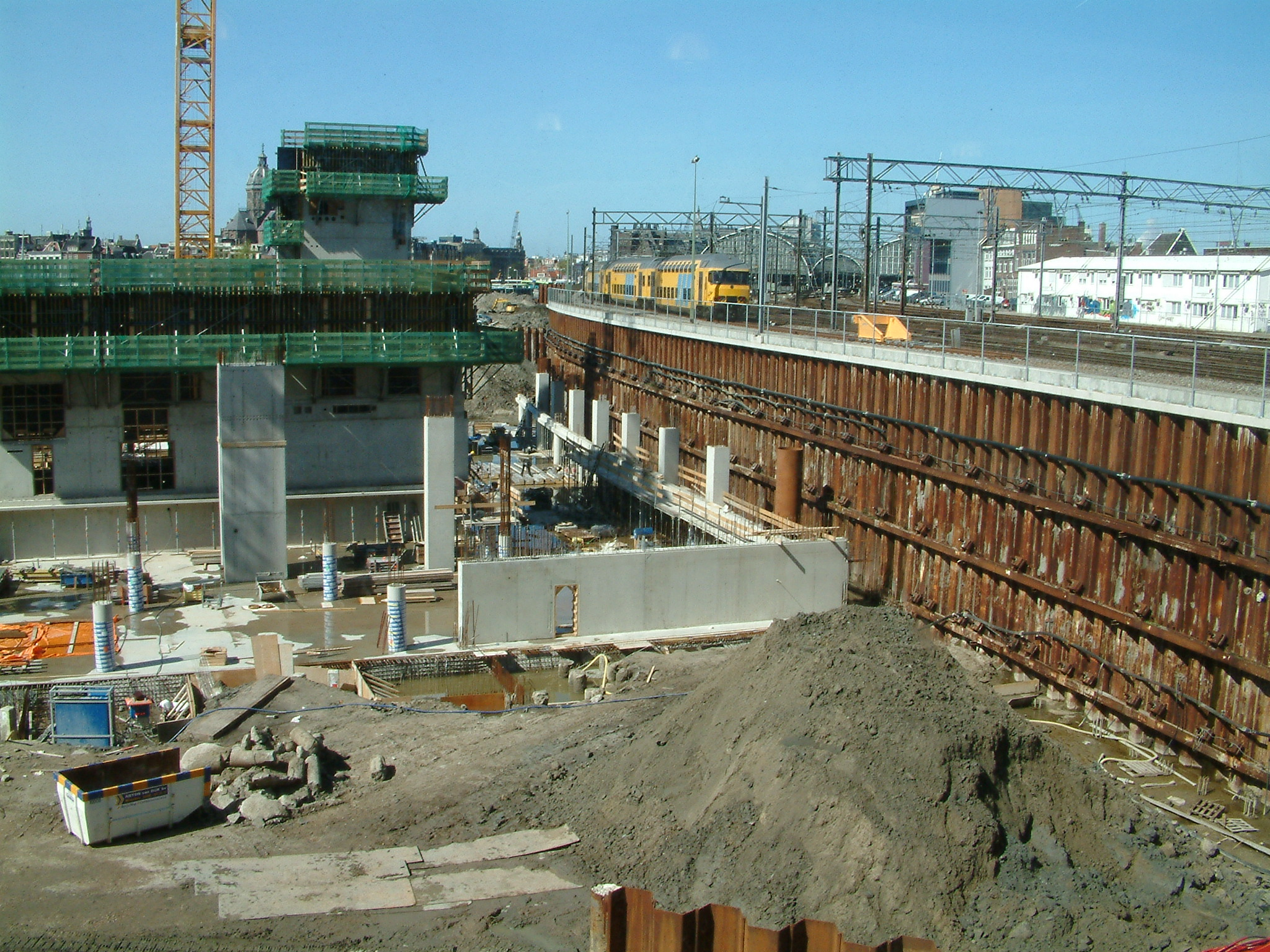
Featured image: Public domain construction site photo by Fons Heijnsbroek, via Wikimedia Commons (CC0).