

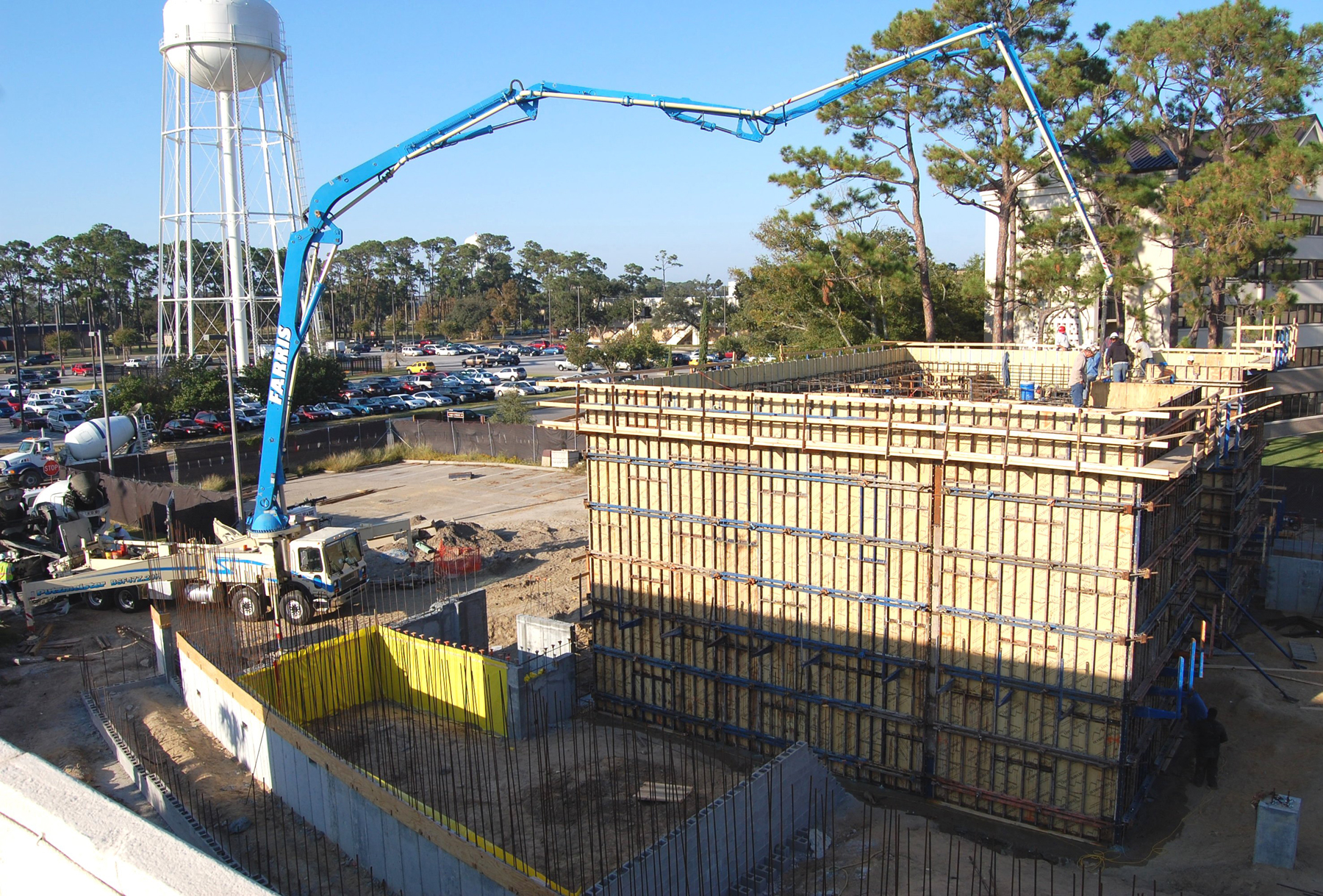
Fleet parking lots and vehicle storage yards ask more from concrete than a standard passenger-vehicle parking area. Box trucks, service vans, delivery fleets, trailers, utility vehicles, and occasional heavy equipment create concentrated wheel loads, repeated turning movements, and daily wear in the same lanes and stalls. For commercial property owners, developers, property managers, and general contractors, the right concrete plan can reduce maintenance calls, improve site safety, and keep operations moving.
Whether the project is a new logistics support yard, a contractor laydown area, a service fleet lot, or an expansion behind an existing commercial building, concrete performance starts before the first truck arrives. The best results come from matching slab design, subgrade preparation, drainage, joints, and phasing to how the site will actually be used.
Start With the Vehicles That Will Use the Site
A fleet yard should be planned around real traffic, not generic parking assumptions. The slab that works for employee parking may not be the right fit for delivery routes, trailer staging, roll-off containers, service bays, or high-turnover vehicle storage. Before finalizing the scope, owners and contractors should identify the heaviest regular vehicles, turning paths, loading zones, parking duration, and any areas where trucks stop, idle, or pivot.
Those details influence concrete thickness, reinforcement, joint spacing, edge support, and the need for additional base preparation. Areas used for slow-speed turning and braking often deserve extra attention because tires can grind against the surface and stress slab edges. Entry aprons, gate areas, fuel or wash-down areas, dumpster pads, and loading approaches may also need different detailing than the main parking field.
Subgrade and Base Preparation Drive Long-Term Performance
Many fleet-lot problems begin below the concrete. Soft soils, inconsistent fill, poor compaction, trapped water, or an underbuilt stone base can lead to settlement, rocking slabs, pumping at joints, cracking, and drainage problems. Commercial concrete work for vehicle storage yards should include a careful review of existing grades, soil conditions, utility trenches, and prior pavement failures.
For new construction, this often means proof rolling, removing unsuitable material, installing a compacted aggregate base, and coordinating with civil plans before concrete placement. On replacement projects, the demolition phase is also a chance to find recurring problems such as saturated base material, failed utility patches, or areas where heavy vehicles have been overloading the previous pavement section.
Drainage Cannot Be an Afterthought
Fleet yards need positive drainage because standing water accelerates deterioration and creates operational headaches. Ponding water can soften supporting soils, increase freeze-thaw stress in colder conditions, contribute to surface scaling, and make pedestrian or vehicle movement less safe. In commercial settings, poor drainage can also interfere with tenant operations, loading schedules, and customer-facing areas near the work zone.
Good planning considers slope, inlet locations, trench drains, catch basins, surrounding pavement elevations, and where runoff goes after it leaves the slab. Concrete should be placed with slopes that move water efficiently without creating awkward transitions for trucks, trailers, forklifts, or accessible pedestrian routes. Where a concrete yard connects to asphalt, building entrances, overhead doors, or existing curb lines, transitions need to be clean and durable.
Joint Layout Helps Control Cracking
Concrete will move as it cures and as temperatures change. A thoughtful joint layout gives that movement a planned place to happen. For fleet parking lots and storage yards, joints should be coordinated with traffic patterns, slab geometry, drainage structures, utility covers, building edges, and high-stress turning areas.
Random cracking is more likely when panels are too large, shapes are irregular, or joints do not line up with re-entrant corners and embedded structures. Saw-cut timing also matters. Cutting too late can allow early shrinkage cracks to form before joints are in place. Cutting too early can ravel the surface. A commercial concrete contractor should have a clear jointing plan before placement begins, especially on larger pours with multiple trucks and finishers moving at once.
Edges, Approaches, and Gate Areas Need Extra Attention
Fleet properties often fail first at the places where vehicles enter, turn, stop, or leave the concrete. Gate approaches, driveway aprons, loading lanes, and transitions to public roads may see repeated braking and turning from heavy vehicles. Unsupported edges can crack or break down when tires travel close to the perimeter or when adjacent pavement settles.
Depending on the site, better performance may require thickened edges, doweled transitions, reinforced aprons, curb integration, or careful coordination between concrete and asphalt paving. These details are especially important at shared commercial sites where the concrete must support daily operations without creating trip hazards, drainage problems, or maintenance conflicts with neighboring pavement.
Plan Around Operations and Access
Many fleet concrete projects happen on active properties. The yard may need to stay partially open for deliveries, tenant access, service vehicles, or emergency routes. That means phasing is just as important as mix design and finishing. A practical phasing plan identifies which areas can close, how vehicles will be rerouted, where materials and equipment will stage, and how curing time will affect the schedule.
Property managers and general contractors should also communicate limits clearly to tenants and site users. Fresh concrete needs protection. Opening a slab too early to heavy vehicles can damage the surface, stress joints, and reduce the service life of the installation. For businesses that rely on daily fleet movement, planning temporary access routes in advance is usually less expensive than rushing the new concrete into service.
Surface Finish Should Match the Use
The right finish balances traction, durability, maintenance, and appearance. A fleet yard typically needs a surface that can handle vehicle traffic while providing enough grip for pedestrians and drivers in wet conditions. The finish should also consider how the area will be cleaned, whether carts or equipment will roll across it, and whether the site includes customer-facing zones near storefronts, offices, or service counters.
Overworking the surface, adding water during finishing, or finishing while bleed water is present can weaken the top layer of concrete. On commercial projects, good crew timing and site coordination are essential because larger pours require consistent placement, finishing, jointing, and curing practices across the full work area.
Maintenance Starts With Smart Details
Even well-built concrete benefits from regular inspection. Fleet properties should watch for joint deterioration, settlement near inlets, cracked corners, spalling around embedded structures, failed patches, and areas where water ponds after storms. Catching small issues early can help prevent larger failures that disrupt operations or require more invasive repairs later.
Owners should also think about how the site will be used after construction. Snow removal equipment, pressure washing, chemical exposure, oil leaks, and heavy container movement can all affect long-term performance. Clear maintenance expectations help protect the investment and support a safer, cleaner commercial property.
Work With a Commercial Concrete Contractor Early
Fleet parking lots and vehicle storage yards are not just bigger parking lots. They are operational surfaces that support revenue, logistics, tenant access, and property safety. Bringing a commercial concrete contractor into the planning process early helps align the slab design with vehicle loads, drainage needs, sequencing, and the realities of working on active sites.
Caliber Concrete Company works with commercial property owners, developers, property managers, and general contractors on concrete projects built for heavy use and long-term performance. To discuss a fleet parking area, vehicle storage yard, loading route, or related commercial concrete scope, contact Caliber Concrete Company.
